Commercial pricing swings widely because square footage, ceiling height, building materials and after-hours access all change the job. A site visit and a written scope are the only reliable way to get a real number. Call the number on this page to be connected with a local mold company in Converse.
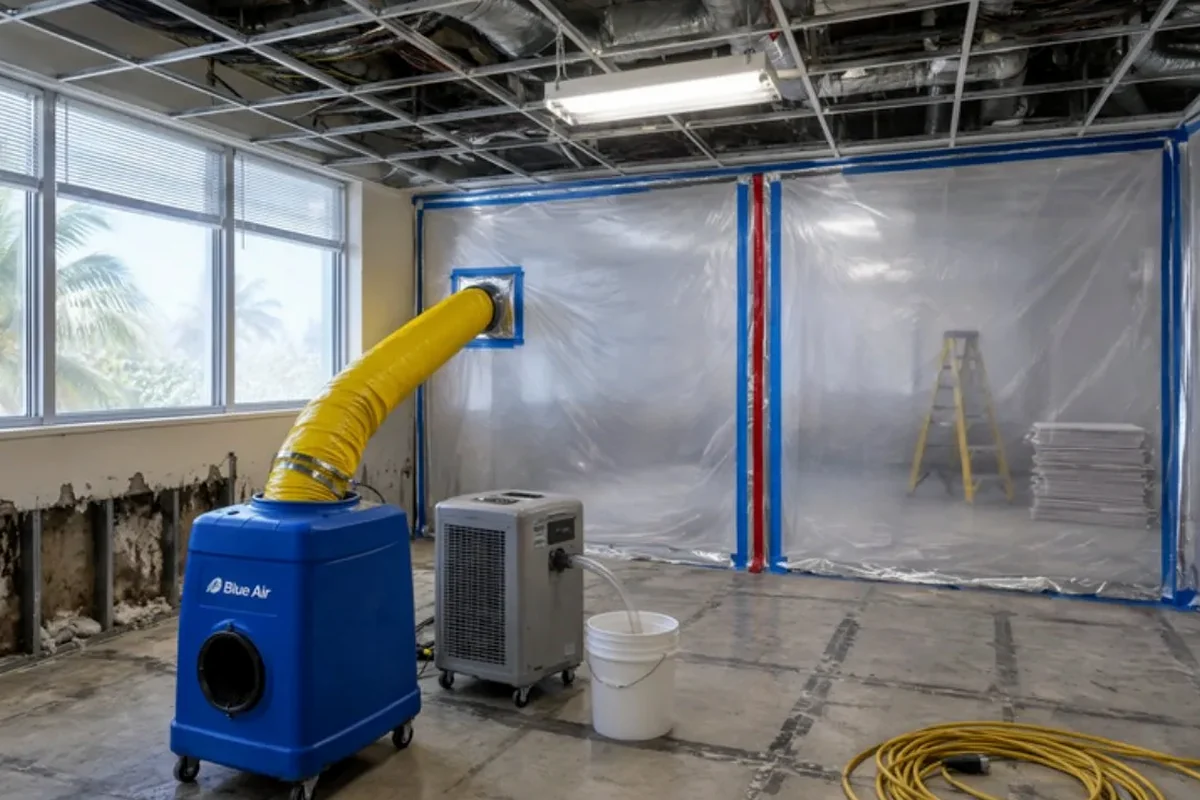
When a tenant complaint is more than a complaint
A single email about a smell is easy to dismiss. A second email from a different suite, or a maintenance log that keeps showing the same wet corner, is a pattern. Patterns tell you the source has not been fixed, and that is the point to bring in outside help.
HVAC systems carry the load
Rooftop units, split systems and air handlers in ceiling plenums work hard here. A clogged condensate line, a pan that overflows or insulation that gets wet can spread moisture through a suite without anyone seeing water on the floor. Ceiling tiles near a supply register are a common place to spot it first.
With so many Converse properties built in the 2000s, mold often follows a single failure such as a clogged condensate line or a roof flashing detail rather than years of wear.
What shapes a commercial quote
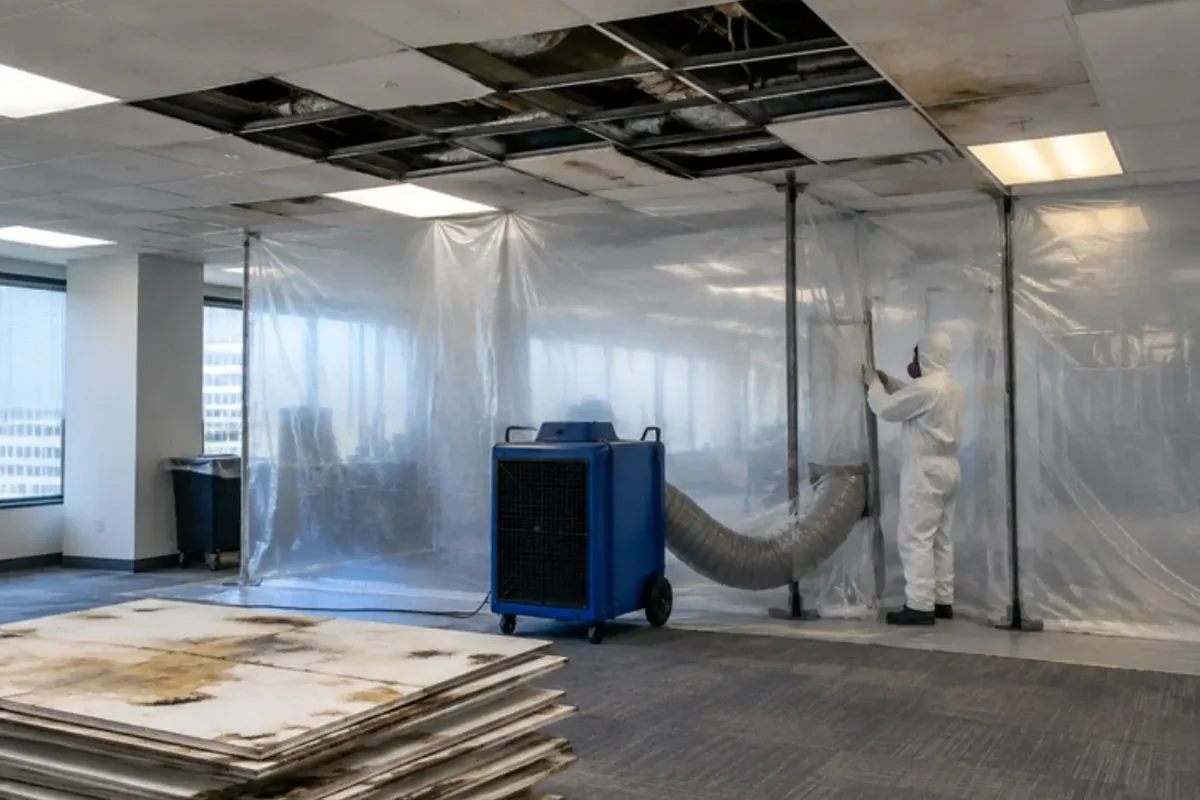
The big drivers are how many square feet are affected, how many wall and ceiling layers are involved, and whether the space must stay open. Occupied buildings need more containment, more air control and tighter scheduling than an empty one. Ask each company to explain which of these applies to your building.
Containment in an occupied building
Plastic barriers, a negative air machine and sticky mats at the entry keep dust and spores in the work zone. Ask where the barrier will sit, how the air will be exhausted and how neighbors in the building will be told. Ask who monitors the barrier each day.
When closing a space makes sense
If growth covers a large area, the HVAC is carrying odor through the building, or contents are heavily affected, closing the zone while work happens is often the cleaner choice. Your assessor can advise on how far the closure needs to reach.
Checks to make in Converse
A job of 25 contiguous square feet or larger can only be assessed or remediated for pay by a company holding a TDLR mold license. TDLR's Verify a License search takes the number and shows whether it is active.
On a regulated Texas project, one company assesses and a different company remediates, which keeps the cleanup plan and the clearance check independent.
Cleanup alone rarely needs a permit, but replacing framing, drywall or cabinets afterward might; the Converse Permits and Inspections Division can say what applies.
If rainwater or a rising creek came inside, look the address up on FEMA's flood maps and call your insurer before the cleanup starts.
Help is also a call away in Universal City, Schertz and Cibolo.
Commercial Mold Remediation questions in Converse
Can my business stay open during mold work?
Does insurance cover commercial mold?
Is sampling always needed?
Can our maintenance staff handle it?
More mold services in Converse
Commercial Mold Remediation nearby
Helpful guides
Sources
Last updated: